Design for Succession
Every manufactured object contains latent functions through standardized dimensions, engineered durability, and modular assembly logic. The methodology applies equally to industrial and biological materials. Whether synthetic polymer or natural fiber, the principle remains identical: what succession is this component already prepared for?
Refunc is a circular design laboratory operating between the Netherlands and Germany, making explicit what industrial manufacturing does accidentally: creating successor functions. The practice transforms industrial surplus into functional architecture through systematic function-shifting.
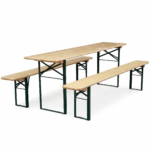
Beer tables become interior walls. Flat surfaces, standardized dimensions, built-in structure. Clipboards become cladding. Weather-resistant backing, mounting clips intact. Moving blankets provide insulation. Textile density and thermal properties already specified. This isn’t adaptation. It’s recognition.
Traditional recycling dismantles material to force predetermined forms. This approach recognizes what the industrial process already prepared. Material selection happens at the intersection of existing industrial form and architectural potential, at minimal intervention threshold.
The Hybrid Catalogue House demonstrates inverted nomadism: instead of moving the structure through space, the structure adapts it’s skin to place. Each location offers its own material vocabulary. The building listens to what’s available and responds accordingly, dwelling in material time rather than aesthetic preference.
Resources flow through industrial cycles, accumulate in surplus, vanish from one context to appear in another. Refunc treats this material mobility as a design premise, working adamantly toward continuous use. However, continuous use of polluting materials remains problematic. The complete solution requires shifting production itself toward sustainable materials and processes, addressing both what exists now and what production must become.
Manufacturers don’t consider what happens after the first function ends. They should. The template already exists through standardization, durability, and modularity. Make succession-readiness an intentional specification, not an accidental byproduct. Eliminate waste at the design stage, not the disposal stage.